run your plant
BUILD PREDICTABLE OPERATIONS
We help maintenance and plant leaders identify where performance can improve, build a practical strategy, and implement the changes that make reliability and operational performance more predictable.



You work harder, but the operation doesn't become more predictable
When reliability problems disrupt performance, priorities shift, teams become reactive, and the same problems can keep coming back.
You’re left wondering, why does this keep happening?
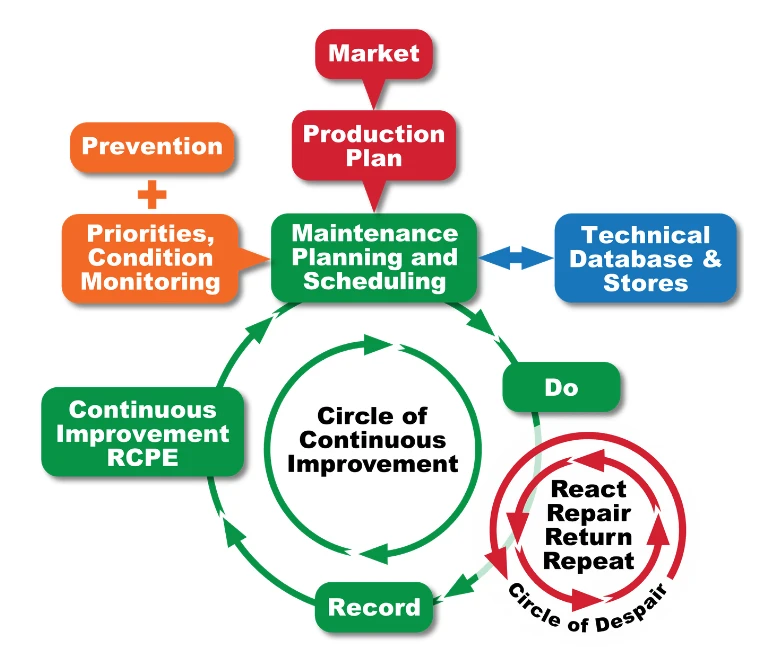
Improvement doesn't happen in isolation.
Equipment reliability, work management, people, processes, and technology all influence operational performance
One Journey
A CONNECTED APPROACH TO BUILDING MORE RELIABLE, PREDICTABLE OPERATIONS
01
Assess & Strategize
Understand your current state, identify opportunities, and establish priorities for improvement.
02
Equipment Reliability
Detect and prevent failures, eliminate recurring problems, and improve asset peformance.
03
Work Management
Plan better, execute better, and get more from your maintenance resources.
Assessments
Understand how your current maintenance practices are slowing you down from reaching business goals.
Experience you can put to work
Since 1972, IDCON has worked alongside organizations to improve reliability and maintenance performance in demanding industrial environments.
I think that we have made a tremendous amount of progress and we are well on our way to Maintenance Excellence.
Our IDCON Senior consultant’s ability to connect with our people and their ability to quickly gain an understanding of our company and our culture served us very well. Your guidance and coaching have been very valuable to this effort. I look forward to working with you in the future.
MICHAEL HILDEBRANDManger STO Process Improvement - Union Gas Limited
“IDCON became a partner-vendor in our journey to improving our success. They worked with us to use a practical, common-sense approach as always but allowed us to modify the journey to include some specific needs in our overall processes, that together, have aligned and improved the way work is being identified and performed in our company.
We are achieving success with this One Domtar approach which combines the foundational elements that need to be in place, with specific business designs to fit the way we do business. The team effort between our two companies made several process changes seem like one cohesive process of improvement to our team members.”
Larry BryantDirector of Reliability - Domtar
In our mission to continuously improve we have asked IDCON to help us with their extensive experience and the tool CBP [Current Best Practices] to find the best possible work processes and set the stage for the partnership between operations and maintenance. The project is a success.
INGE NILSON Swedish Steel AB (SSAB)
IDCON's Results Oriented Reliability and Maintenance philosophy support our Reliability efforts from basic to best practices.
Together with IDCON's experienced consultants, ICL Dead Sea achieved significant step-change in the leadership system and process while establishing continuous improvement capabilities.
LIOR LOBELOperation VP - ICL Dead Sea Potash
The IDCON organization was engaged to provide support for our national maintenance best practice initiative. Their team was involved with assessing practices and mentor Fonterra Maintenance staff starting 2004 and onwards. IDCON traveled New Zealand visiting many if not all of our 26 sites to work alongside site leadership teams and specifically our maintenance organization.
I found their team to be engaging, enthusiastic and great coaches that were prepared to operate at any level within the business to ensure the message was well understood. I respect their team and IDCON the way they approach the consulting business and are more than happy to provide this testimonial. I would recommend IDCON to any organization that is developing its maintenance and reliability programs and I wish them all the best in the future.
STEPHEN ELLIOTT Fonterra
“I met Christer Idhammar at a maintenance excellence seminar over 25 years ago and he has made a difference Buckeye’s performance. Over the last 25 years, IDCON has made an impact on the industry through a constant message of excellence in reliability, maintenance practices and principles.
The influence of Christer Idhammar and IDCON have had on the leadership at Buckeye continues to reinforce a constancy of purpose staying the course with common sense maintenance principles. That is why today our facilities continue to operate at high efficiencies and why our Foley Mill has received recognition for maintenance excellence”
Note by IDCON: Buckeye was awarded the NAME (North American Maintenance Excellence Award) award 1994.
JOHN CROWE Buckeye Technologies (retired)
Ready to build more predictable operations?
Start by understanding where you are today and where the greatest opportunities exist.
Contact Us Today
Talk with a member of our team, today.
See how you and your team can get ahead.
(919) 847-8764
Business Phone
info@idcon.com
"*" indicates required fields