

This column is the second in a series of articles about the implementation steps you need to take if you want to be successful in improving reliability and maintenance, sustain that improvement and after that continue to improve.
After you have defined, agreed upon and documented your fundamental beliefs and principles
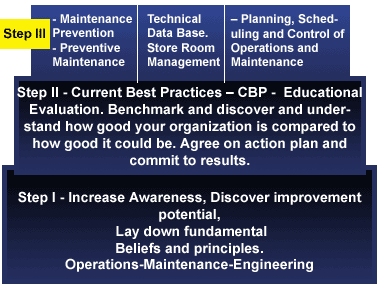
(Step I – in the implementation pyramid as described in the July column) you should do an educational evaluation of how your present practices and performance compares to Current Best Practices – (CBP). We call these practices “Current” because we constantly discover better practices then the practices we know today. In defining these CBP, we structure them in nine key processes such as:
- Leadership and Organization.
- Planning and Scheduling of Operations and Maintenance.
- Maintenance Prevention and Preventive Maintenance.
- Technical Database.
- Root Cause Problem Elimination.
- Stores Management interface with maintenance.
- Facilities, Tools and Workshops.
- Engineering Interface with maintenance.
- Skills development.
Some of these Key Processes are divided in sub processes such as Preventive Maintenance, which is divided in a total of eight sub processes:
3.1 Maintenance Method Selection
3.2 Cleanliness.
3.3 Lubrication.
3.4 Alignment.
3.5 Balancing
etc.
All key Processes and Sub processes are defined by their elements and it is on this level you need to evaluate and learn from best practices. Examples on elements include:
“Work Order Backlog is reviewed weekly by operations and maintenance” and
“Work order statuses are updated automatically when parts arrive for awaiting work orders”
Just to mention two of a total of 130 elements within the Planning and Scheduling process.
Most important is that an organization executes these practices. If the process is only documented, but not executed, it has obviously much less value. In the evaluation you should therefore distinguish between documentation, execution and tracking, where Execution has the highest weight.
It is important that the evaluation is well documented and precise in its definitions and scoring methodology because it will be used as a learning tool and a way to measure progress, or the lack thereof. Many big corporations have used this structure to do self evaluations in all their plants.
When you do the evaluation according to a well structured document you will educate your organization by the fact that the members will themselves discover what the right things to do are, and how well the organization execute best practices compared to how good they could be executed. That the organization itself discovers what needs to be done is a very key to commitment, successful implementation and achieving results in increased production reliability and lower manufacturing costs. We call this type of education “Discovery based education”.
We have done hundreds of evaluations of operations and maintenance organizations all over the world and on a scale of one to 100, the best organization has been rated 75, the average is 36, so there are a lot of opportunities to improve reliability and maintenance.
What you will find is that the biggest improvement potential lies in improving all or part of the following key Processes:
- Maintenance prevention, Preventive Maintenance.
- Technical Data Base and Store Room management.
- Planning, Scheduling and Control of Operations and Maintenance.
- Root Cause Problem Elimination.
Of course you knew this before. The important thing is that the whole organization must discover this together. If you do this evaluation with much involvement of your organization you will not only save a lot of time and money compared to more traditional maintenance audits, you will also have started improvement initiatives and results.
Step III. You have now aligned your organization and decided what to improve and in which order you are going to implement improvements. In the November column I will discuss this step III in more detail.